Archives
- 2018-07
- 2019-08
- 2019-09
- 2019-10
- 2019-11
- 2019-12
- 2020-01
- 2020-02
- 2020-03
- 2020-04
- 2020-05
- 2020-06
- 2020-07
- 2020-08
- 2020-09
- 2020-10
- 2020-11
- 2020-12
- 2021-01
- 2021-02
- 2021-03
- 2021-04
- 2021-05
- 2021-06
- 2021-07
- 2021-08
- 2021-09
- 2021-10
- 2021-11
- 2021-12
- 2022-01
- 2022-02
- 2022-03
- 2022-04
- 2022-05
- 2022-06
- 2022-07
- 2022-08
- 2022-09
- 2022-10
- 2022-11
- 2022-12
- 2023-01
- 2023-02
- 2023-03
- 2023-04
- 2023-05
- 2023-06
- 2023-07
- 2023-08
- 2023-09
- 2023-10
- 2023-11
- 2023-12
- 2024-01
- 2024-02
- 2024-03
- 2024-04
- 2024-05
- 2024-06
- 2024-07
- 2024-08
- 2024-09
- 2024-10
- 2024-11
- 2024-12
- 2025-01
- 2025-02
- 2025-03
-
Caspase-4 Colorimetric Assay Kit synthesis About this report
2025-03-03
About this report 2018 Alzheimer's Disease Facts and Figures is a statistical resource for U.S. data related to Alzheimer's disease, the most common cause of dementia. Background and context for interpreting the data are contained in the Overview. Additional sections address prevalence, mortality a
-
OCT also is known as POU F plays an
2025-03-03
OCT4 (also is known as POU5F1) plays an important role in embryonic stem cell self-renewal, development and reprogram somatic cell into pluripotent stem cell [[5], [6], [7]]. Recently, many studies also find OCT4 promotes the progression of many tumors. For example, Wnt/β-catenin promotes the expans
-
AHR mediated MMP upregulation has been
2025-03-03
AHR-mediated MMP1 upregulation has been shown in response to tobacco smoke [32]. Tobacco smoke contains various AHR ligands such as benzo[a]pyrene. Both benzo[a]pyrene [15] and FICZ [13] are high-affinity ligands for AHR and upregulate CYP1A1 and CYP1B1. FICZ is rapidly degraded by CYP1A1 [20], [33]
-
br Materials and methods br Results
2025-03-03
Materials and methods Results Discussion Several major signaling and developmental pathways (e.g. EGFR, ALK, KRAS, TGFβ, Notch and Wnt/β-catenin) have been shown to be involved in lung carcinogenesis and they are being exploited as targets of the non-small cell lung cancer therapy (for revi
-
In fact serotonin is a major
2025-03-03
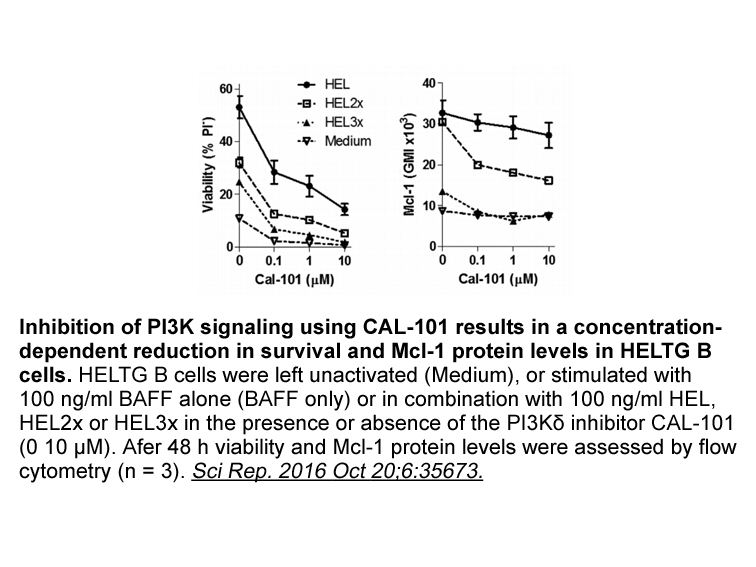
In fact, serotonin is a major modulator of dopaminergic (DA) neuronal activity through the 5-HT2C receptor. Studies have shown that the selective 5-HT2C receptor agonist Ro60-0175 blocks the burst-firing of mesolimbic DA neurons, which project from the ventral tegmental area (VTA) to the nucleus acc
-
Previous studies have demonstrated the presence of
2025-03-03
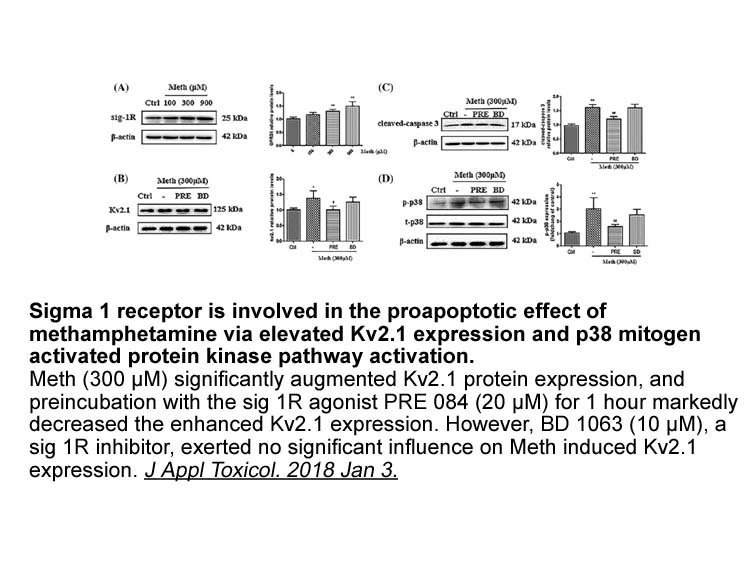
Previous studies have demonstrated the presence of soluble NTPDases, 5′-nucleotidase and adenosine deaminase in rat blood serum as well as in human blood (Doleski et al., 2016; Oses et al., 2004; Yegutkin, 1997; Yegutkin et al., 2007). In addition, our earlier reports have shown that these membrane-
-
br Results br Discussion Dopamine regulates
2025-03-03
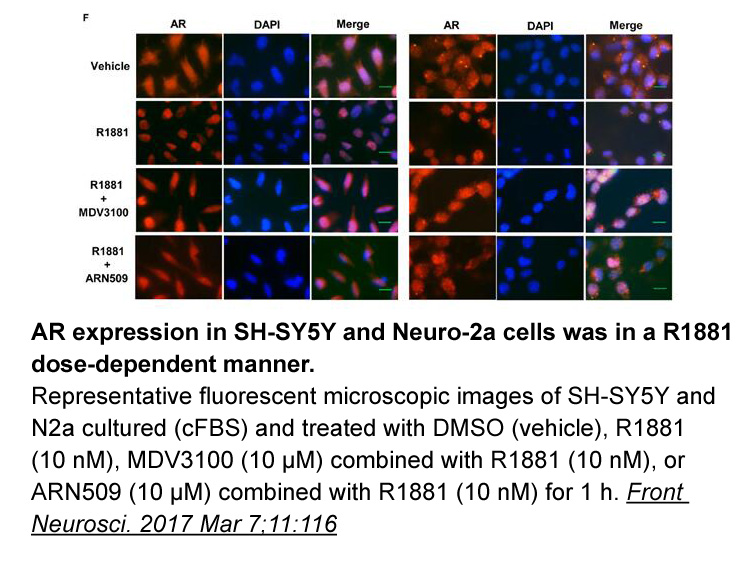
Results Discussion Dopamine regulates behavioral responses to nicotine in Drosophila (Bainton et al., 2000), but neurochemical measurements of dopamine after nicotine stimulation had not been made. Here, we demonstrate for the first time that the stimulation of nAChRs causes dopamine release i
-
The difficulty of characterizing nAChRs
2025-03-03
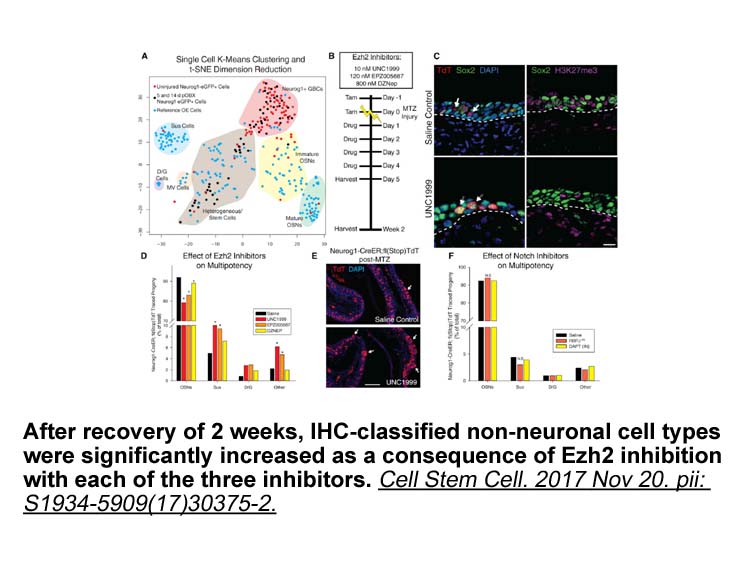
The difficulty of characterizing nAChRs in the central nervous system is also exemplified by early observations that nicotine caused no detectable effect when applied on a brain slice and it is only with the focal and high time resolution of more recent experiments that the effects of nicotinic neur
-
During myeloid cell maturation expression of LO
2025-03-03
During myeloid cell maturation, expression of 5-LO mRNA and protein is strongly induced (60–130-fold) by calcitriol (1,25(OH)2D3) and transforming growth factor-β (TGFβ) [6,7]. The upregulation of 5-LO mRNA transcription is mainly due to transcript elongation and mRNA maturation [8,9]. Interestingly
-
br Materials and methods All animal experiments
2025-03-03
Materials and methods All animal experiments were performed using the recommendations of the Guide for the Care and Use of Laboratory Animals (National Research Council, 2011) and approved by the University of Colorado—Denver Institutional Animal Care and Use Committee. Adult male Sprague—Dawley
-
br Conflict of interest statement br Benign prostatic hyperp
2025-03-03
Conflict of interest statement Benign prostatic hyperplasia (BPH) is a highly complex process characterized by an increased number of epithelial and stromal 6-Bnz-cAMP sodium salt in the transition zone. , , Autopsy studies by McNeal detail the evolution of histological changes within these 2
-
Introduction Lysophosphatidic acid LPA is a key serum borne
2025-03-03
Introduction Lysophosphatidic sodium fluoride (LPA) is a key, serum-borne phospholipid, regulating a number of cellular processes such as proliferation, migration and differentiation through its interaction with G-protein coupled receptors. LPA receptor signaling has been implicated in several di
-
br Funding This study was supported by Grant UM CA
2025-03-01
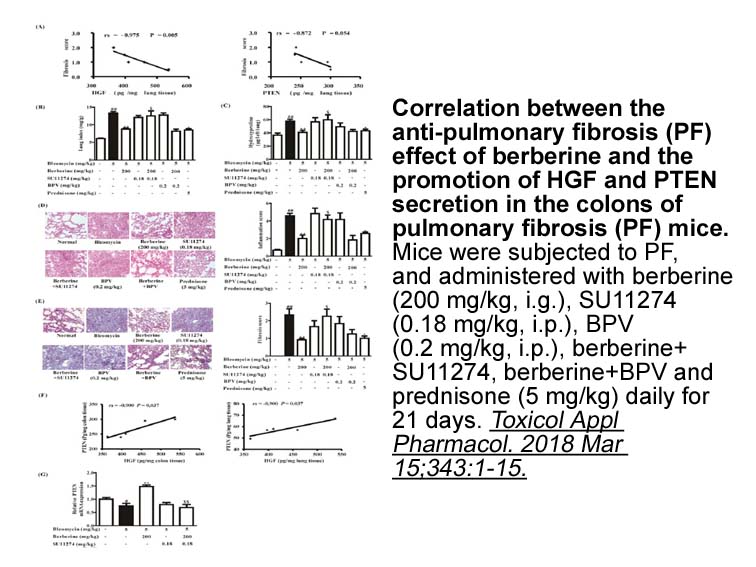
Funding This study was supported by Grant UM1-CA186690 (NCI-CTEP) and R01CA204173 (CJB). This project used the UPCI Cancer Pharmacokinetics and Pharmacodynamics Facility (CPPF) and was supported in part by award P30-CA47904 and R50CA211241. Introduction Despite the efficacy of platinum based
-
VUF 11207 fumarate The apoptosis promoting Bcl family includ
2025-03-01
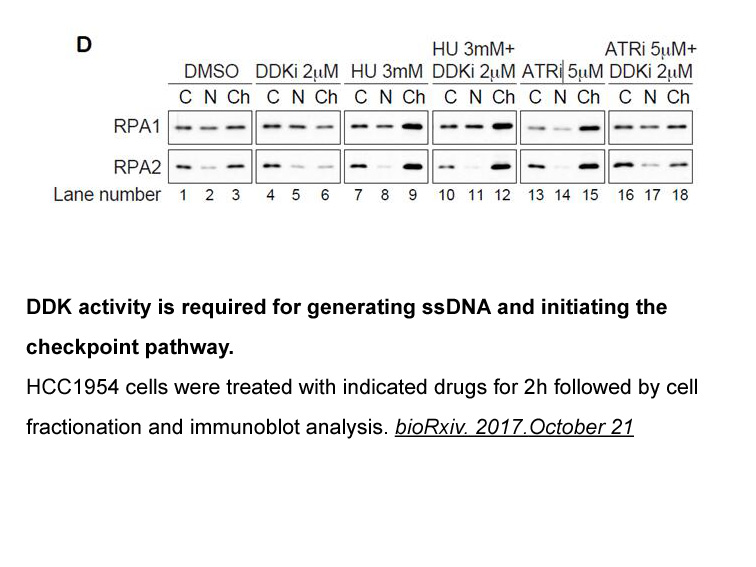
The apoptosis-promoting Bcl-2 family includes BH3-only proteins (e.g., Bim, Bid and Bad) and multiple-domain proteins (e.g., Bax and Bak). At the time of apoptosis stimulation (e.g., DNA damage), only the BH3-only protein is activated, directly or indirectly promoting Bax/Bak oligomerization, changi
-
br Dysregulated aromatase expression the link between obesit
2025-03-01
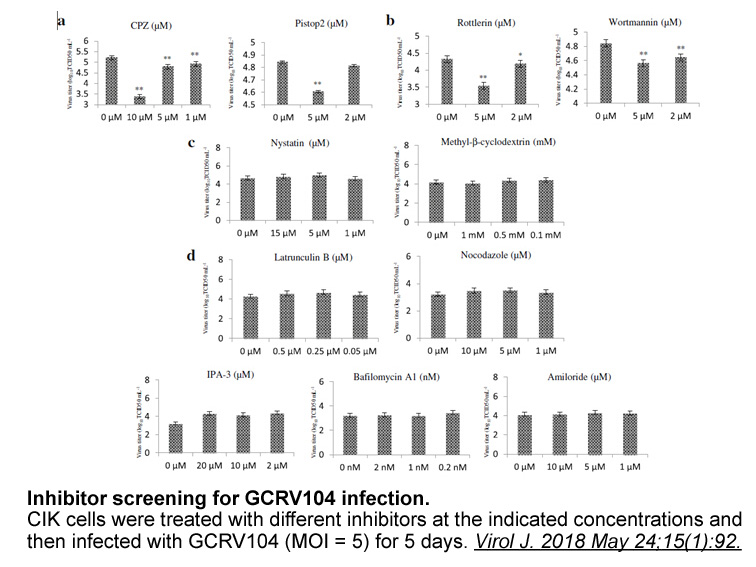
Dysregulated aromatase expression: the link between obesity and breast cancer Obesity has been associated with abnormally high expression of the enzyme aromatase in the breast, influencing the local production and bioavailability of estrogens (Morris et al, 2011, Subbaramaiah et al, 2012). Bowers